Loan-to-Value Ratio
Ratio between mortgage amount and property value that shapes insurance, refinance, and equity limits.
Definition
Loan-to-value ratio, usually shortened to LTV, compares the mortgage amount to the property’s value. It shows how much of the property value is being financed rather than covered by borrower equity.
Why It Matters
LTV is one of the most important ratios in Canadian mortgage underwriting. It affects minimum down payment, high-ratio versus low-ratio treatment, mortgage insurance, refinance room, and how much risk the lender believes it is taking.
How It Works in Canada
In simple terms, LTV equals the loan amount divided by the relevant property value. On a purchase, that often means comparing the mortgage to the purchase price or to the lower lending value if the appraisal comes in low. On a refinance or home-equity transaction, the lender will usually rely on its accepted value assessment rather than the owner’s estimate alone.
OSFI’s guidance treats LTV as a core underwriting measure and clarifies that references to LTV under Guideline B-20 are generally to LTV at origination unless another context is specified. In ordinary borrower language, a higher LTV means the borrower has less equity at the start of the deal and the lender has less cushion if value falls.
This is why a 95% LTV purchase is often spoken of as a 5% down-payment file. It also explains why a mortgage with 20% or more down is low-ratio while a mortgage above 80% LTV becomes part of the higher-ratio conversation and may need insurance if otherwise eligible.
Formula
$$ \text{LTV} = \frac{\text{Loan Amount}}{\text{Property Value}} \times 100% $$
Quick Examples
| Property value | Mortgage amount | Starting LTV | What it usually signals |
|---|---|---|---|
| $500,000 | $475,000 | 95% | Very high leverage and usually insured purchase financing |
| $500,000 | $400,000 | 80% | Conventional threshold |
| $500,000 | $325,000 | 65% | Lower leverage and more borrower equity |
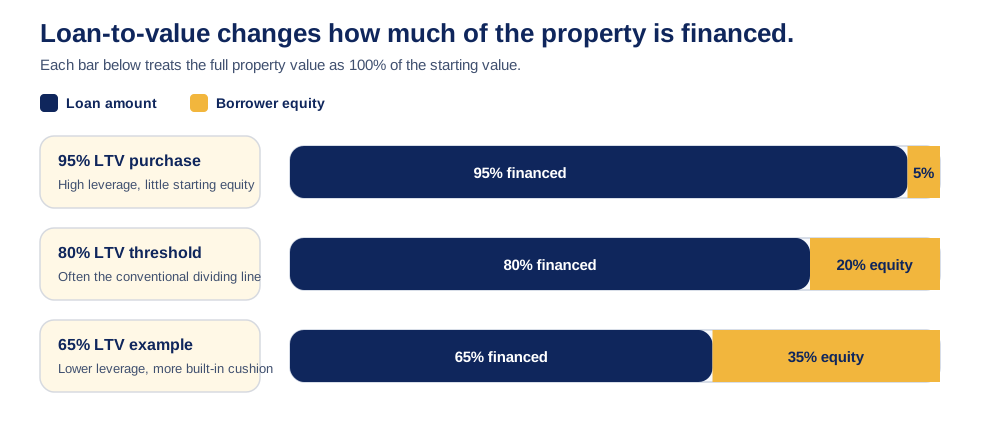
The diagram above is not a pricing chart. It is a simple leverage picture showing how the mortgage share shrinks as borrower equity grows.
Practical Example
If a borrower buys a home for $500,000 and borrows $475,000, the starting LTV is 95%. If the borrower instead borrows $400,000, the LTV is 80%.
Common Misunderstandings
LTV is not the same thing as gross debt service ratio or total debt service ratio. Those ratios test affordability, while LTV measures leverage against the property’s value.
Borrowers also sometimes assume LTV always uses the listing price or purchase price. In practice, the lender may rely on the lower accepted value if the appraisal does not support the expected number.
Caveat
LTV treatment varies by transaction type, lender, insurer, and whether the file is a purchase, refinance, switch, or HELOC structure. Combined borrowing on title can introduce related measures that go beyond first-mortgage LTV alone.